
UNA ESTACIÓN EN EL INFIERNO
UNA ESTACIÓN EN EL INFIERNO
Arthur Rimbaud
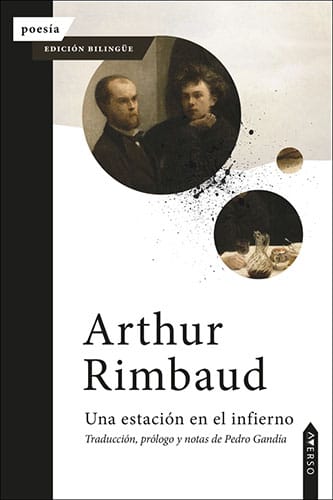
SINOPSIS
Arthur Rimbaud is the artist of perpetual adolescence, a figure of irreducible singularity both in life and in his work. First a Symbolist, then a Decadent; regarded by many as a precursor of Surrealism and the Beat Generation; a cultural transgressor, an outcast, a rebel without homeland or creed, the very embodiment of rebellion.
A Season in Hell, a long prose poem written in 1873, is a work of dazzling beauty, marked by a deeply personal and confessional tone. This bilingual edition presents a poet who casts off convention in pursuit of a more intense and personal mode of expression. The work resembles a sojourn in a psychological Hades, in which Rimbaud imitates the inner monologue of a condemned soul in confession, where the voice gives expression to emotional states while seeking reconciliation with its own identity and experience. His innovations in rhythm and harmony are carried even further, as he also experiments with syntax and vocabulary to produce poetic effects of remarkable intensity. It is in this radical break with convention—in this poetry on the margins—that Rimbaud’s legacy is found. By challenging and subverting the established forms of poetry, he transformed the very nature of his poetic practice.
Author: Arthur Rimbaud
Translation, Introduction, and Notes: Pedro Gandía. Bilingual edition.
Publisher: Aliar Ediciones, Averso, Poesía Collection, No. 60. Granada (Spain), 2026.
ISBN: 979-13-88327-35-3
136 pages
BUY WORK
ABOUT THIS WORK